What is cumulative accounting? How a carbon credit rating can improve over time
April 23, 2026 - Research
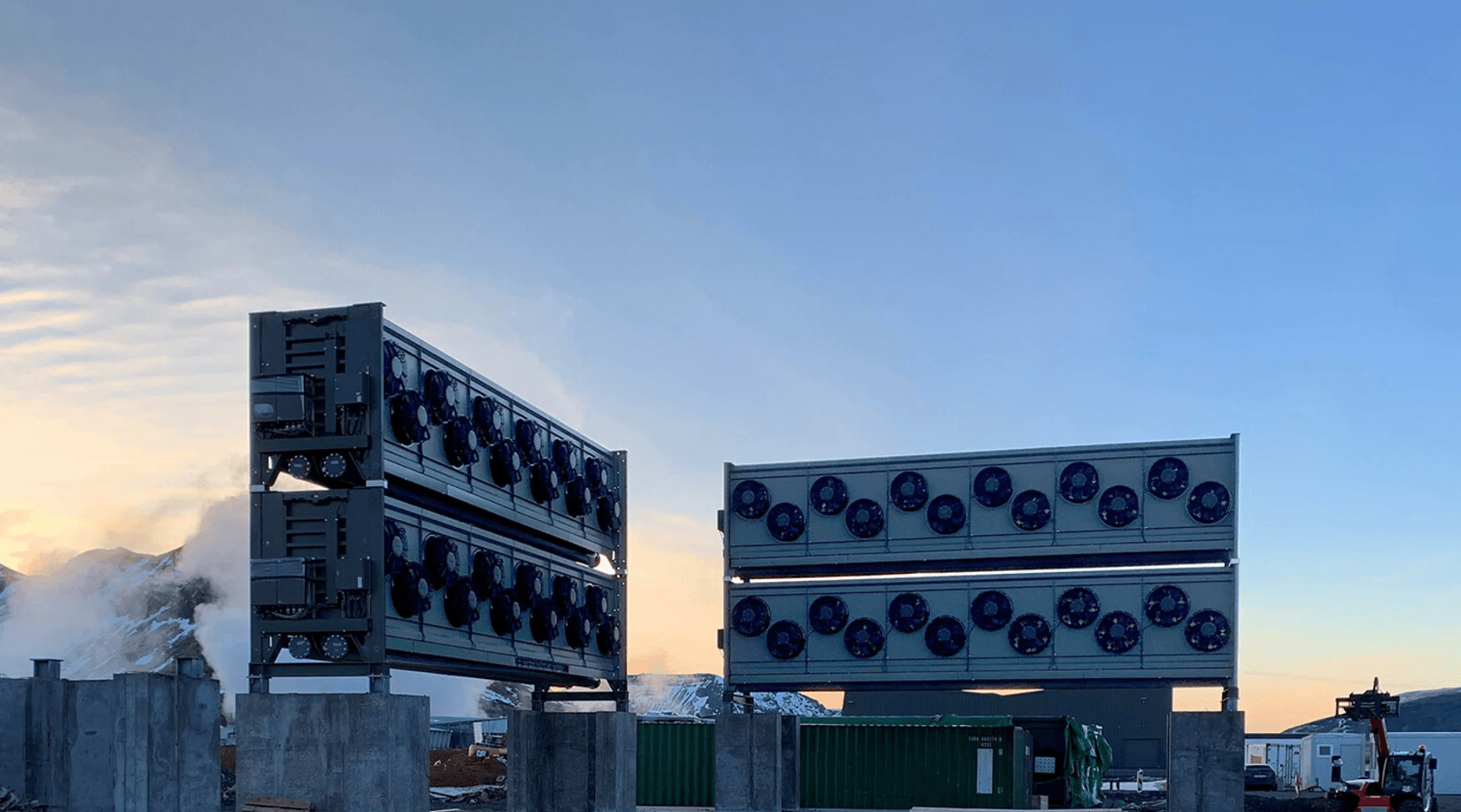
Image: Orca direct air capture plant in Iceland. Credit: Climeworks.
When evaluating any carbon credit project, it's important to make sure that you are focused on what the atmosphere sees. Some projects can be net emitters when they first come online (for example, if a project has to build facilities), but make up the difference over time. How do you approach such a project early on? In this post, we dive into cumulative accounting, including a recent example of credits that have improved from Tier 3 to Tier 2 in our ratings—and rising—because of cumulative removals.
What are Embodied Emissions and "Emissions Debt"?
Some projects, like those that deliver engineered carbon dioxide removals, rely on specialized facilities and equipment. Building this infrastructure creates a significant carbon footprint before a single ton of CO2 is removed. We wrote about the challenge of “emissions debt” in our report with Meta, “The hidden cost of embodied emissions.”
Most crediting programs handle this debt by spreading the carbon cost over the project's expected lifetime. However, this risks creating phantom credits. If such a project starts selling credits as soon as the facility is operational but shuts down a year later, it may have issued credits without actually achieving a net-positive impact on the atmosphere.
Enter Cumulative Accounting
One way to combat this risk is through a cumulative accounting approach, which looks at a credit’s climate impact from day one to the present. In its first year, a project might be a net emitter because it hasn't yet removed enough CO2 to pay back the emissions generated during facility construction. During this time, the project’s net climate benefit is negative. But as the facility continues to operate, the project gradually pays off that initial debt. Once the project clears its emissions debt, it begins to provide a net benefit to the atmosphere.
You can see an example of what this looks like in the chart below of a hypothetical project. The green bars are what the project claims when it amortizes embodied emissions over a ten-year period, and the purple bars are what the atmosphere sees over time, i.e. the actual net climate benefit. In this instance, the project is claiming a net benefit to the atmosphere starting in year 1, even though it is actually a net emitter (purple bars). By year 4, the atmosphere sees a benefit, but the project is still “over-claiming” the actual benefit. By year 10, after all embodied emissions have been accounted for by the project, it is claiming the correct climate benefit.

Calyx Global uses a cumulative ratings approach for certain types of credits, such as engineered carbon removal projects that have significant embodied emissions. This means that our ratings for a given project’s credits will change over time. In particular, the rating is likely to improve as long as project operations continue, and they continue to pay down the emissions debt.
Case in point: Orca Plant
You can see this process in action at the Iceland-based Orca Direct Air Capture plant. The first tranche of credits from this project received a Tier 3 rating from Calyx Global because Orca had not yet fully accounted for its embodied emissions and was still in debt to the atmosphere.
Now, a year later, the credits have already improved to a Tier 2 rating as the facility gradually pays off that initial debt. The plant has now removed more emissions than were involved in its construction. At the current pace, these credits will improve to Tier 1 by next year. Operational improvements in the plant mean it is compensating for its embodied emissions faster than initially expected—a win for the atmosphere and the rating. As noted above, the rating changes because the claim better matches what the atmosphere sees.
Table: Evolution of the Orca Direct Air Capture rating over time
| First Calyx assessment (2025) | Second Calyx assessment (2026) | Future (1-3 years) | |
| Status | Net emitter | Net positive | Further net positive |
| Rating | Tier 3 | Tier 2 | Tier 1 (assuming current rate of removals) |
Another approach: Vintage ratings
Another method for accounting for changes over time is assigning different ratings to different “vintages,” or the specific year in which the emission reduction or removal occurred. This allows a rating to account for time-specific changes. For example, if a new government policy—such as a subsidy for a particular mitigation activity—is introduced ten years into a project, it might change the project's additionality (the likelihood that the climate impact would happen without carbon finance). In such cases, the rating changes because of new information: the situation of the project is fundamentally different.
This is exactly what happened with landfill gas projects in Türkiye. In 2010, the government passed a law that substantially increased the existing feed-in tariff to incentivize renewable energy, changing the potential need for carbon finance for these projects. This does not change the additionality of earlier vintages, where the project needed carbon finance prior to the subsidy. However, as a situation changes the financial picture for a project, it is important to ensure carbon finance is still critical. As a result, several Turkey landfill gas credits produced prior to 2010 are rated Tier 1 in our database, while credits from the same project after 2010 have Tier 3 ratings.
Moving Forward
A full accounting of project emissions up front shows a commitment to science and impact, and, in turn, investment-grade credits that buyers can trust. If a project doesn’t account for those emissions, its rating can still improve over time—it may just receive a lower rating early on. The lower ratings reflect the risk that, for example, a facility may not continue operations, and that credits issued do not (yet) reflect the climate benefit that is being claimed.
As the carbon removals market grows, consistent and transparent accounting for cumulative emissions will be essential to building trust in these projects and ensuring they make a positive contribution to the planet.
Keep up with carbon market trends
Get the monthly newsletter and stay in the loop.
Trusted By






Next Up